
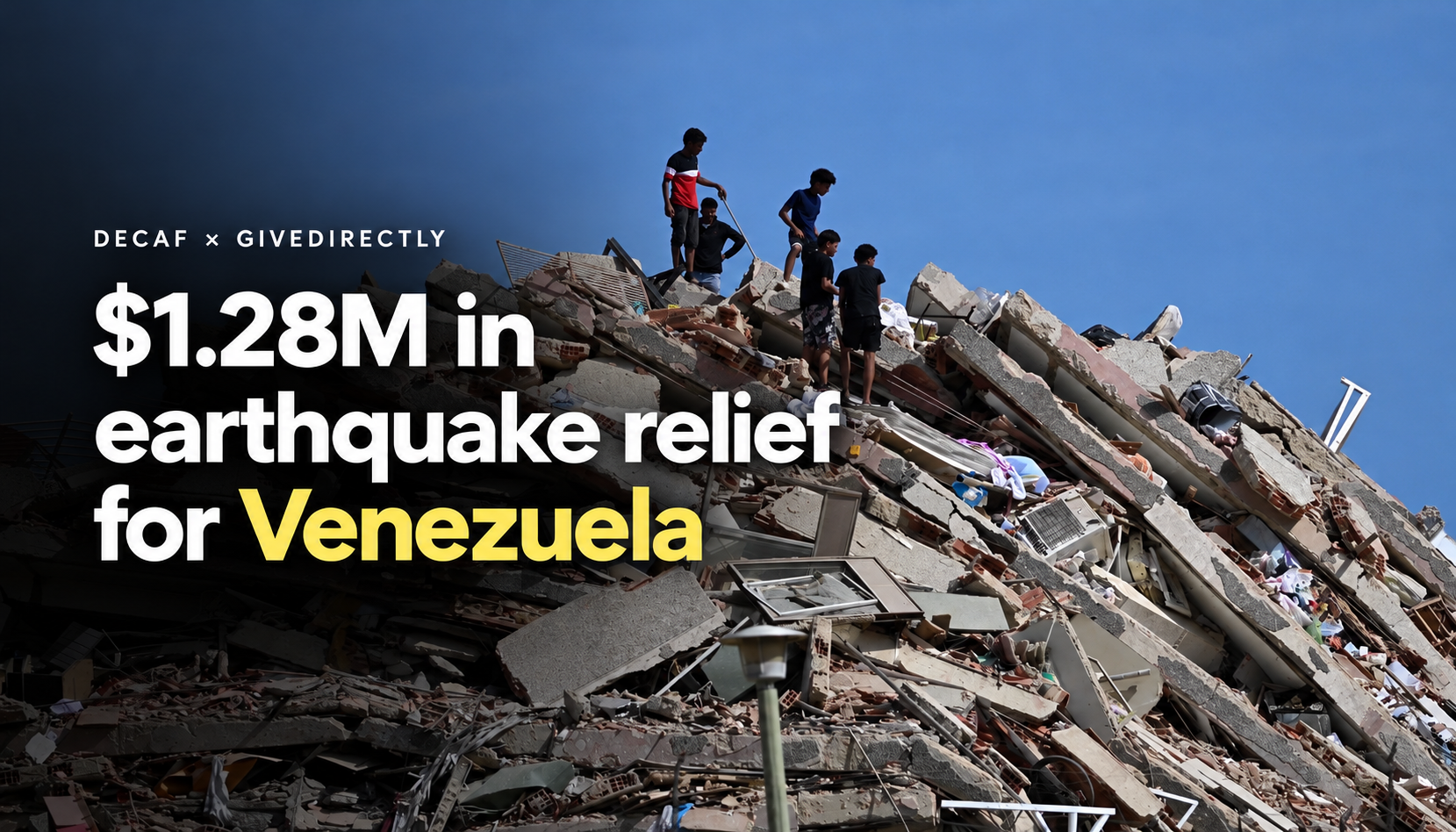
When two powerful earthquakes struck Venezuela in June 2026, thousands of families faced damaged homes, lost income, and an urgent need for assistance. GiveDirectly, an international nonprofit specializing in direct cash assistance, moved quickly to organize a response. But getting money into Venezuela was far from straightforward.
There was no viable conventional international banking route available for the response. Sanctions created significant regulatory challenges, while distributing physical cash at scale would have been difficult and costly. GiveDirectly needed another way to get assistance to families quickly and safely.
Working alongside GiveDirectly and Airtm, Decaf helped deliver $1.3 million in emergency cash to each of 3,765 people, directly into their existing Venezuelan bank accounts. The operation used digital dollars (USDC) on the Stellar network to move funding internationally, with recipients receiving local currency through Pago Móvil, a payment service they already used.
For recipients, the experience was simple. They didn't need to download an application, create a new account, or understand anything about cryptocurrency. They simply received a WhatsApp notification confirming that the money had been deposited directly into their existing bank accounts.
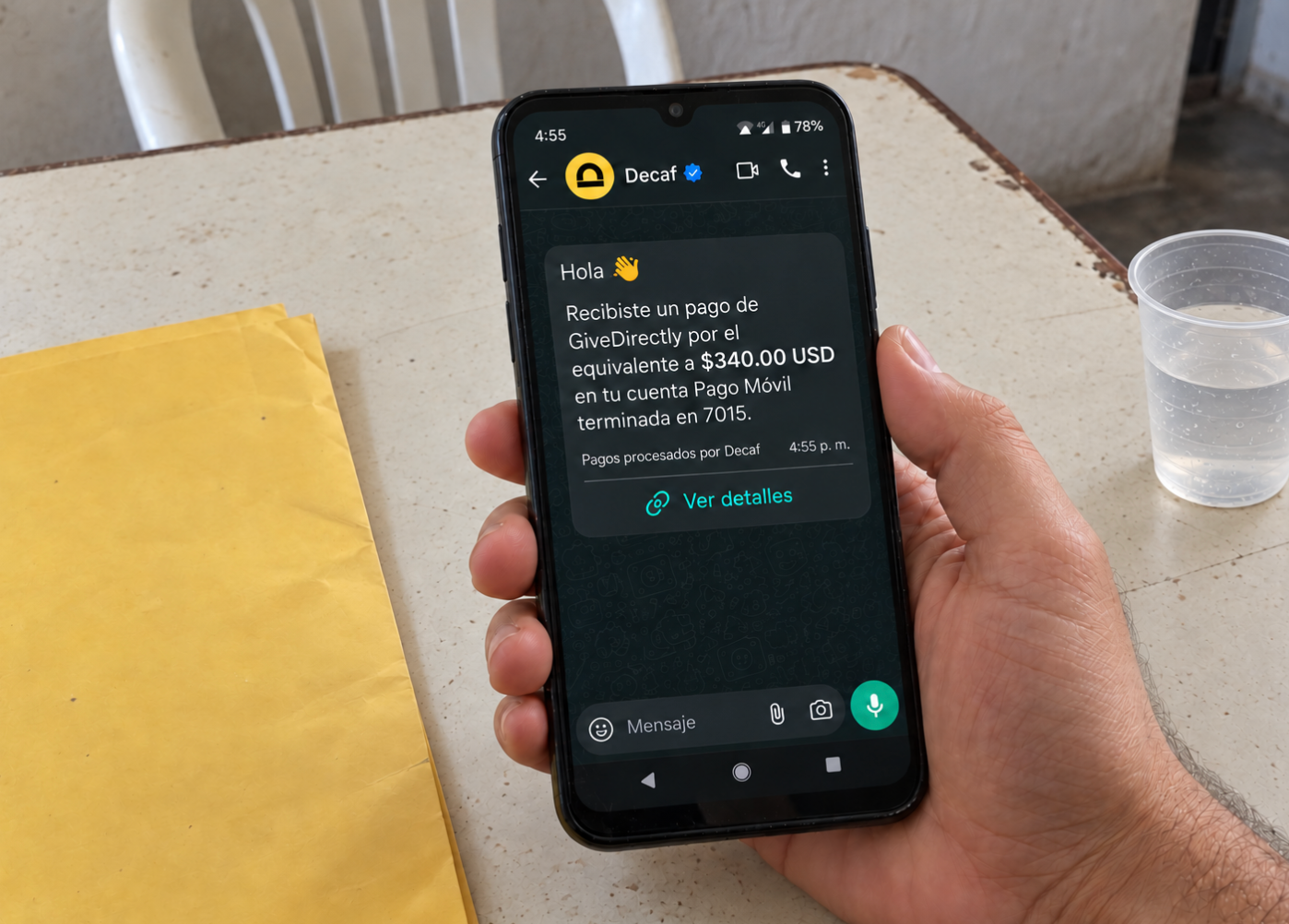
The response also achieved an important result: 86% of donated funds reached recipients as cash, exceeding GiveDirectly's original expectation of 70–80%. Decaf's low-cost stablecoin payments helped make this possible, alongside GiveDirectly's efficient operations.
Making cash delivery simple
One of the biggest challenges was finding a way to deliver money without requiring recipients to sign up for another financial service, download anything, or follow complicated instructions.
Decaf had already developed a solution with Airtm that allowed organizations to send money directly into people's bank accounts in Venezuela. When GiveDirectly needed to deliver emergency assistance, this system provided a starting point.
Within four days, Decaf's team adapted the platform to the organization's needs, adding features to manage thousands of payments at once, send WhatsApp notifications, and provide the security, permissioning and reporting required by an international organization.
Decaf also helped establish a secure way for GiveDirectly to fund the payments through its existing financial accounts, while maintaining control over its money.
Instead of requiring GiveDirectly or recipients to adapt to a complicated payment system, Decaf adapted the technology to make the process work for them.
Making thousands of payments simple
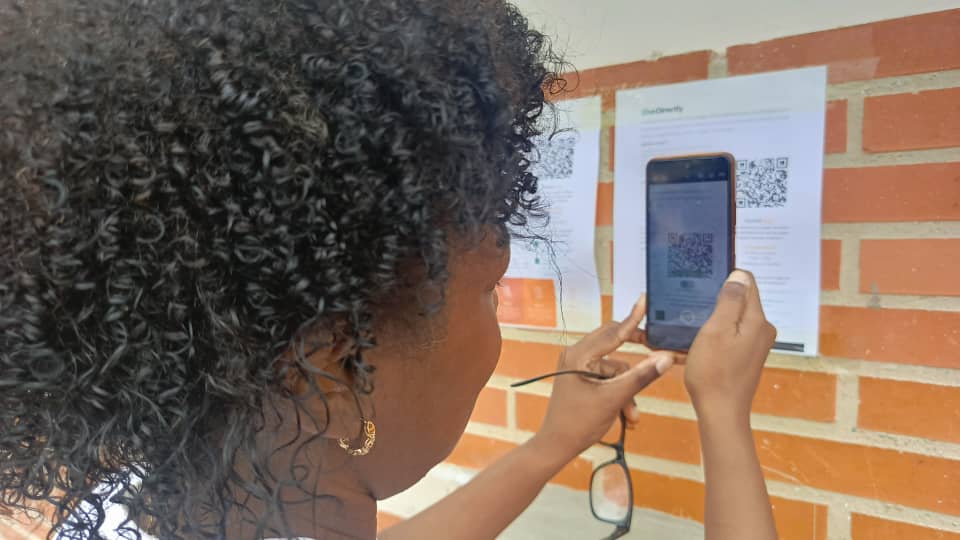
With Decaf Business, GiveDirectly could upload a CSV file containing recipient details and payment amounts, and send thousands of payments directly to people's existing bank accounts in Venezuela. There was no need to process transfers individually, and recipients didn't need to create an account or take any additional steps to receive their money.
Behind the scenes, Decaf worked with Airtm to coordinate the timing of payments around the availability of local currency, ensuring the network could handle the volume without unnecessary delays.
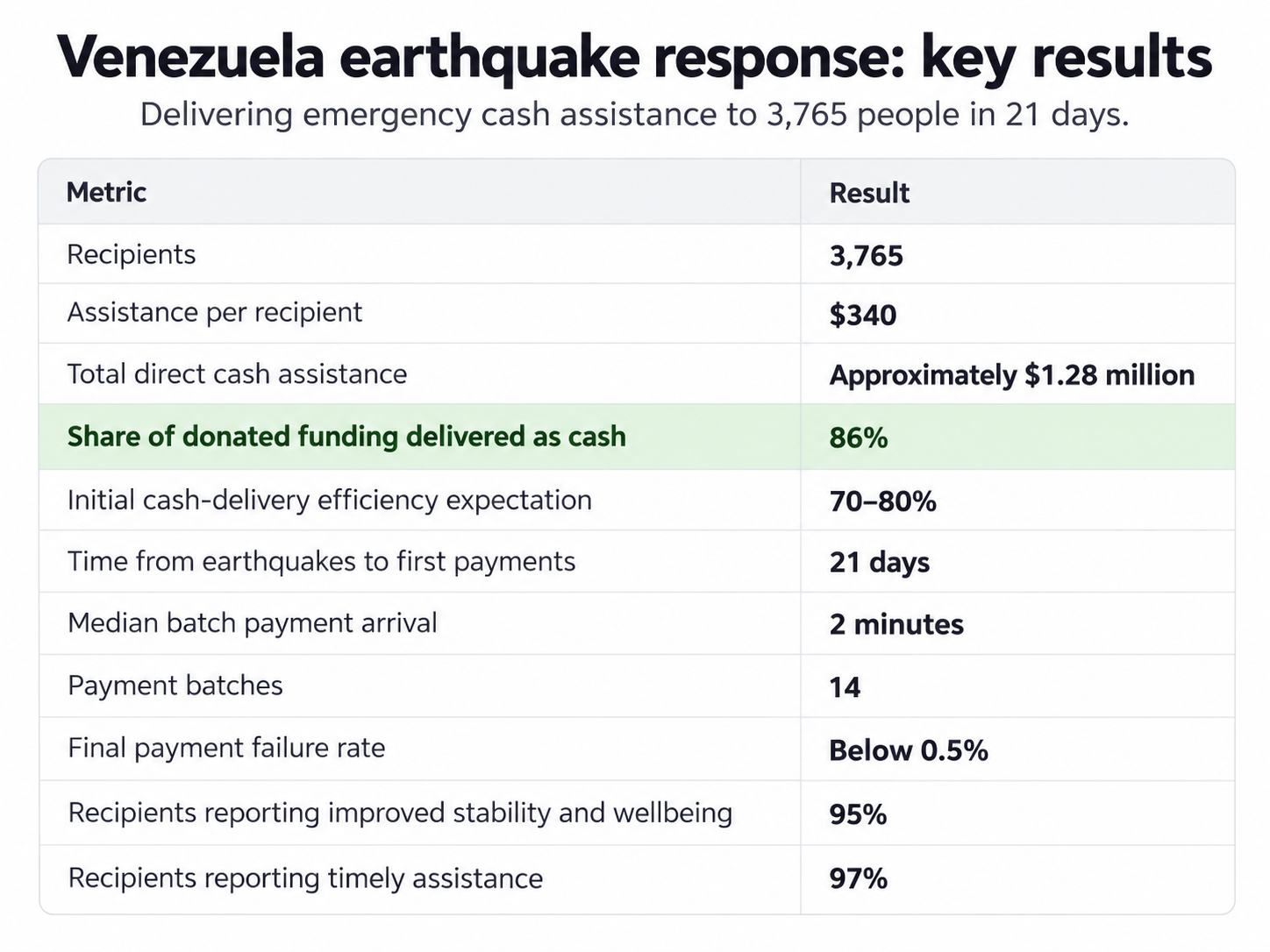
The results demonstrated how effective this approach could be. GiveDirectly reported a median payment arrival time of just two minutes after each batch was initiated, with a final payment failure rate below 0.5%.
For GiveDirectly, what would normally be a complex international payment operation became a straightforward process: upload recipient information, initiate the disbursements, and track the results through Decaf Business.
WhatsApp support and the people behind the payments
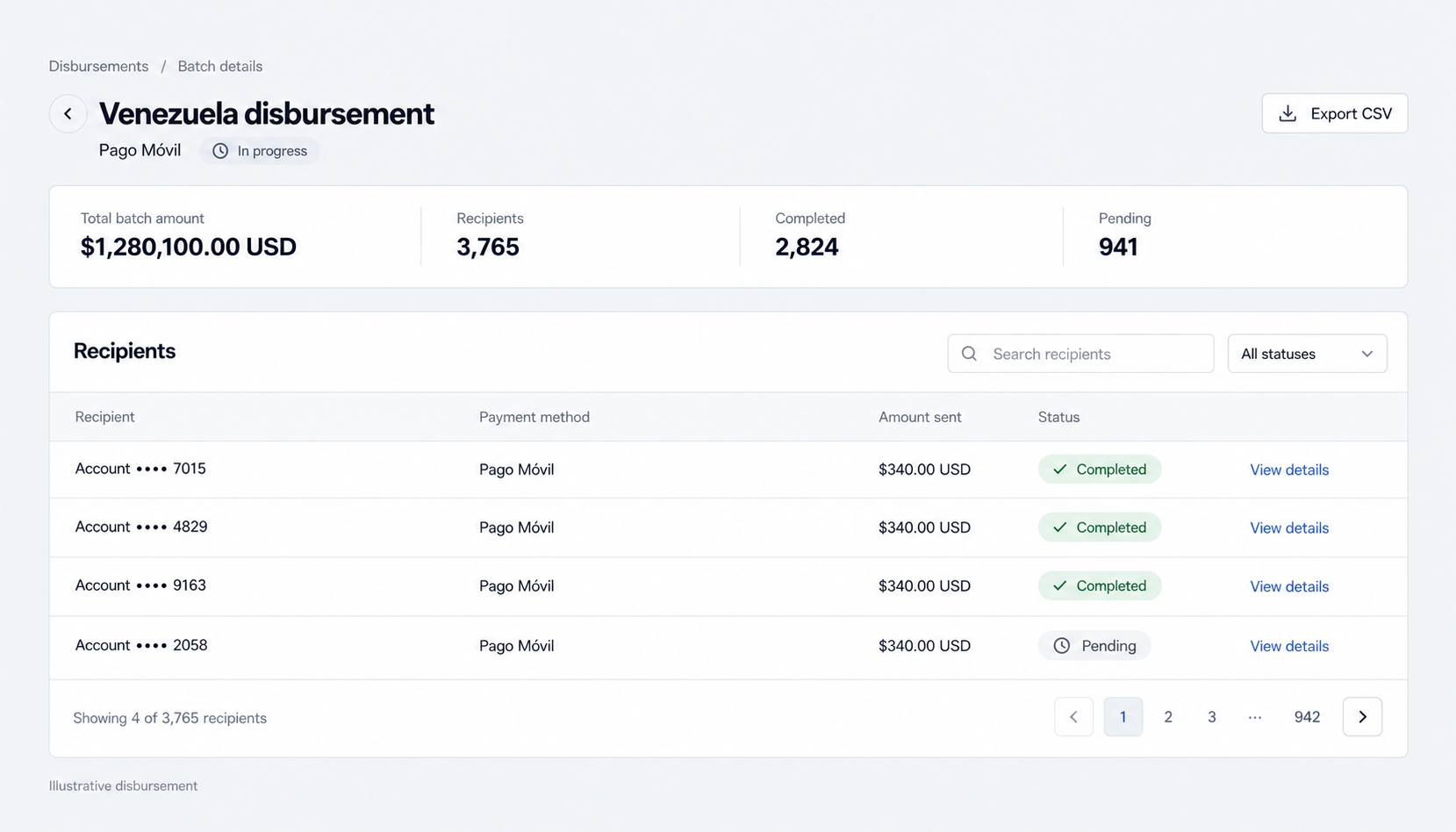
Decaf also sent WhatsApp notifications and provided direct support to recipients through its existing customer service team. People could receive information about their payments and ask questions through a communication channel they already used and are familiar with.
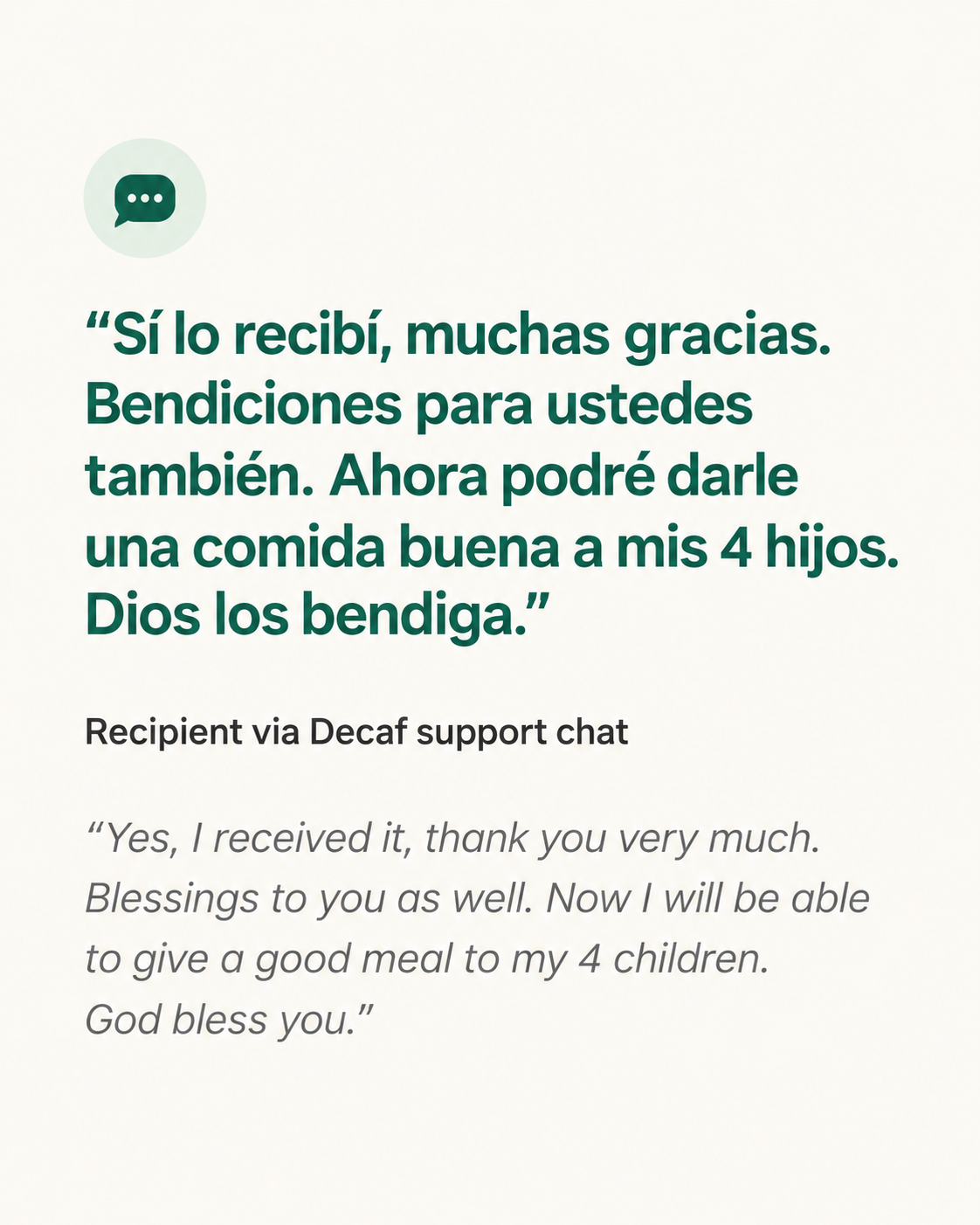
One of the most memorable parts of the project was the feedback received. Many messages weren't requests for help, but simply expressions of gratitude from people who had received their assistance.
Behind every payment was a family trying to recover from the earthquakes. For some, receiving assistance meant being able to buy food, pay for medicine, or replace essential belongings. The technology was important, but what mattered most was that people could access and use the money when they needed it.
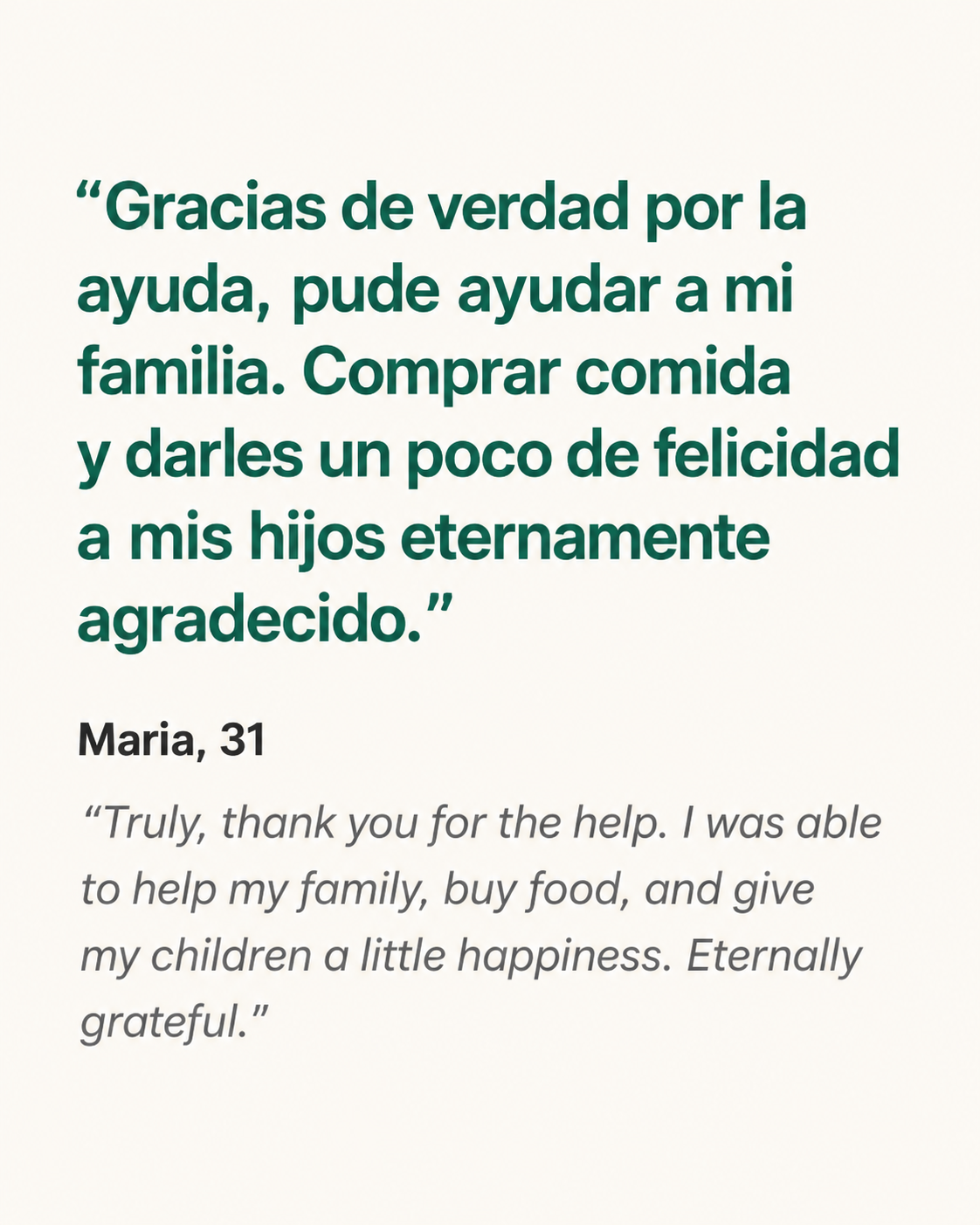
GiveDirectly's follow-up research found that recipients spent their assistance on essentials including food, water, healthcare, and household needs. Ninety-five percent reported improved stability and wellbeing, while 60% said the payments helped them restart or maintain income-generating activities.
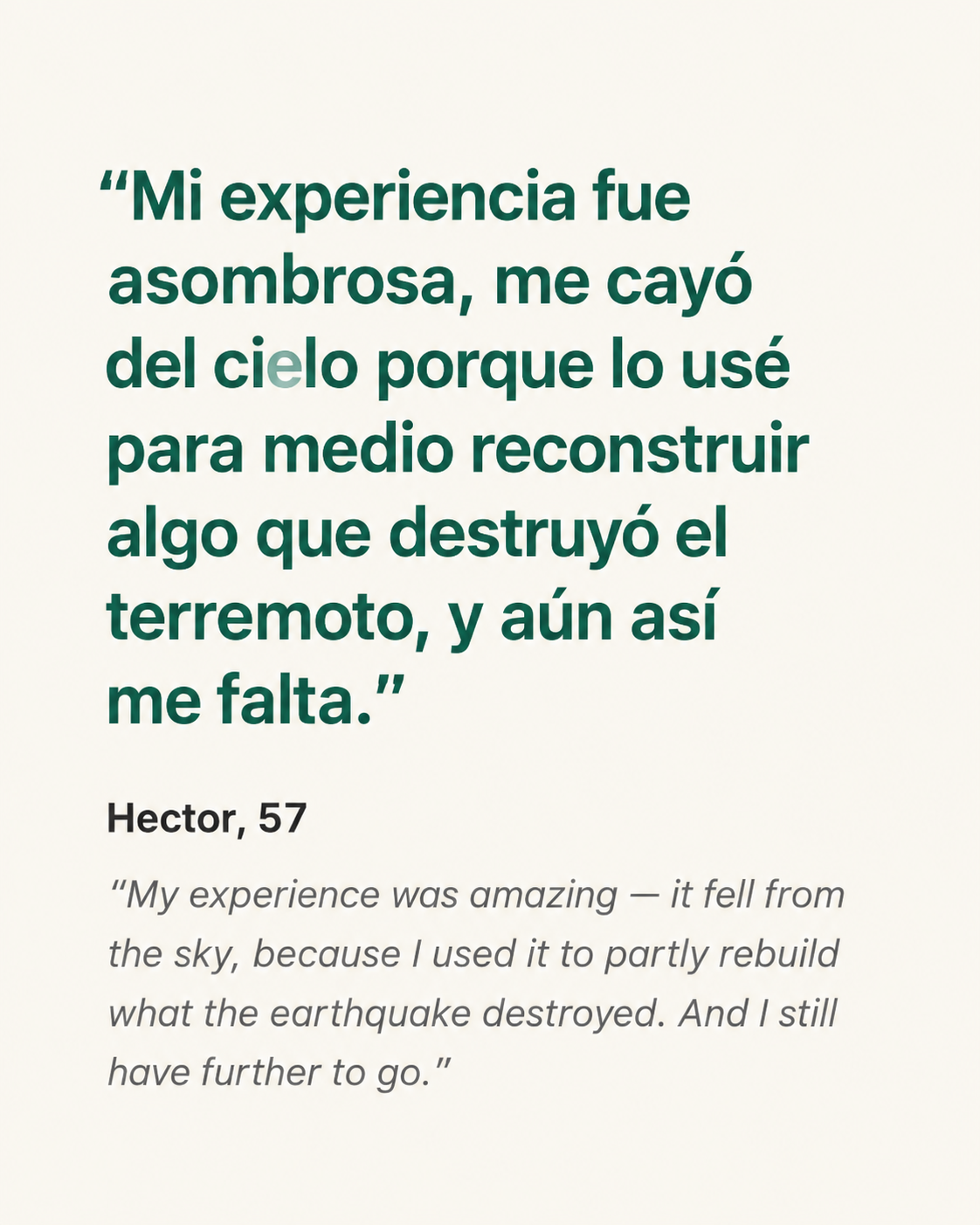
The results: Getting more assistance to the people who need it
The response delivered approximately $1.28 million in direct cash assistance to 3,765 people. First payments began just 21 days after the earthquakes, and 97% of surveyed recipients reported receiving the assistance at the right time.
One of the most encouraging results was that 86 cents of every donated dollar reached recipients directly as cash, above GiveDirectly's initial expectation of 70–80 cents.
Several factors contributed to this efficiency. GiveDirectly was able to manage much of the operation remotely, reducing the need for costly field operations. The program also reached more people than originally planned, allowing its fixed costs to be spread across more recipients.
The payment system offered additional advantages. GiveDirectly could move funds into Decaf in minutes, at no cost, while Decaf and Airtm delivered payments directly into recipients' existing bank accounts, avoiding the costs and complexity of international bank transfers, physical cash distribution, and prepaid cards.
The 86% figure measures the efficiency of the entire humanitarian program, not just the payments. But it raises an important question for organizations delivering assistance: How much of every donated dollar actually reaches the people who need it?
How does this compare with other humanitarian programs?
A 2026 study by the CALP Network, Show Me the Money: Efficiency and Effectiveness in Humanitarian Response, examined the cost of delivering assistance across humanitarian programs.
It found that, on an unweighted average basis, approximately 65% of program funding reached recipients through multipurpose cash assistance, 66% through sectoral cash programs, and 63% through vouchers.
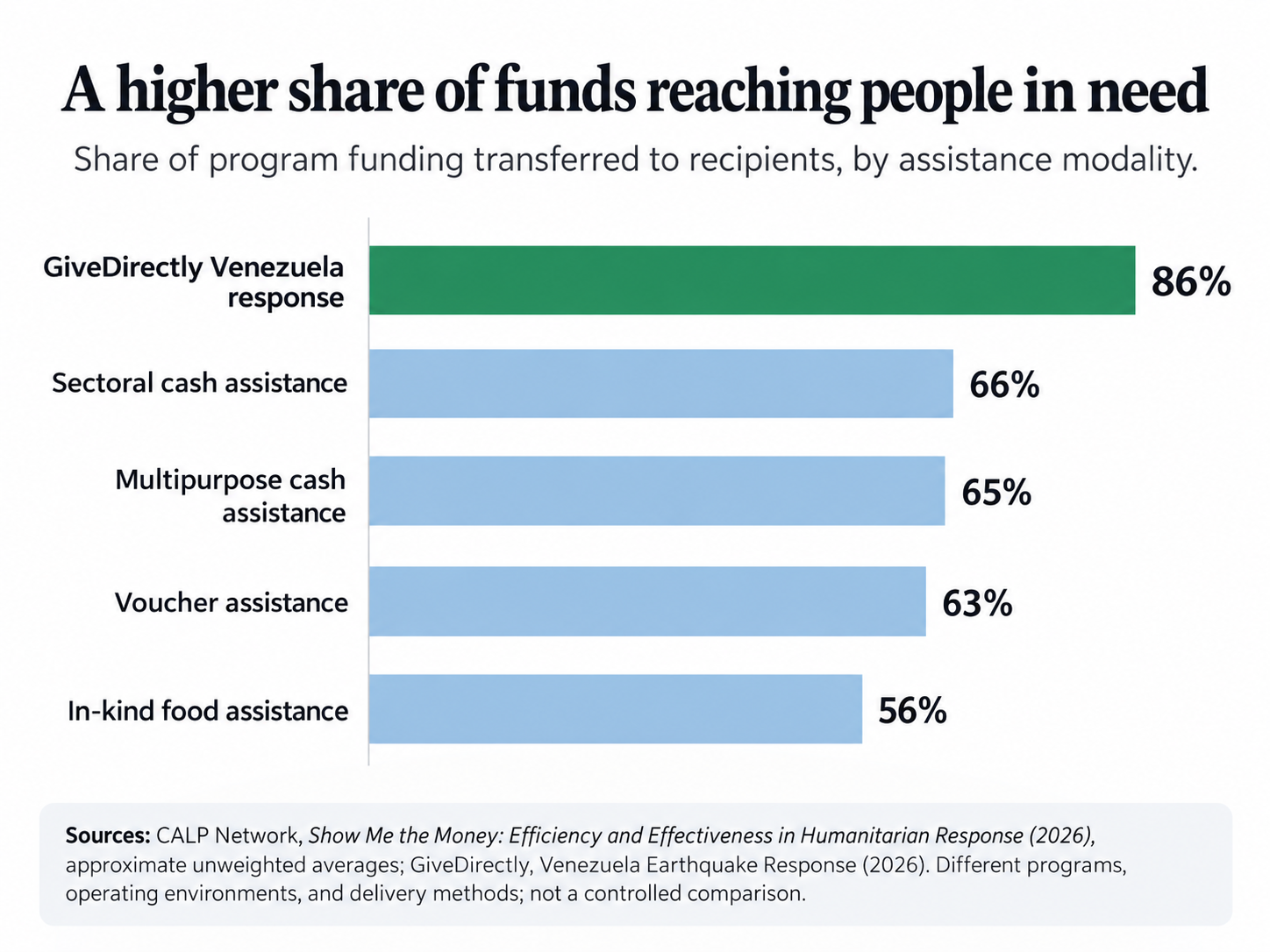
These are averages across different programs and environments, so they aren't directly comparable with GiveDirectly's results. Larger programs also generally achieved higher efficiencies. Still, the research shows that the cost of delivering humanitarian assistance can vary considerably.
For perspective, if a $10 million humanitarian program increased the share of funding reaching recipients from 75% to 86%, that would mean an additional $1.1 million going directly to people in need, assuming comparable budgets and accounting methods.
Traditional methods of distributing assistance can involve costs for cash handling, prepaid cards, currency exchange, intermediaries, and administration. Different situations require different solutions, but the Venezuela response shows how well-designed digital payment systems can help organizations deliver assistance efficiently, even in difficult environments.
For humanitarian organizations, improving how money is delivered isn't simply about reducing transaction fees. It's about making better use of limited resources so that more assistance reaches the people who need it.
Sources: GiveDirectly's Venezuela earthquake response and CALP Network's Show Me the Money study.
What this means for the future of international payments
The Venezuela response demonstrated what can happen when humanitarian organizations and payment providers work together to solve problems that traditional financial systems struggle to address.
GiveDirectly led the humanitarian response, identifying and supporting recipients. Decaf provided the payment platform, adapted its technology, coordinated disbursements, and supported recipients. Airtm helped deliver funds through Venezuela's local banking network.
These same challenges exist beyond humanitarian emergencies. Nonprofits need to send money to beneficiaries and field teams, while businesses need to pay contractors and suppliers around the world. In many cases, international payments remain expensive, complicated, or difficult to access.
For Decaf, one of the most important lessons was the value of being able to adapt quickly. Having an existing payment system was important, but so was having a team that could customize it around an organization's specific needs.
Our goal with Decaf Business is to make global payments simpler for organizations and the people receiving them, whether through bank transfers, mobile money, or cash pickup.
The technology behind international payments may be complex. The experience of sending and receiving money shouldn't have to be.
Read GiveDirectly's full report for more about the humanitarian response and its results.